
Smarter video systems. Built on solid infrastructure.
A modern camera installation is an infrastructure project, not just an equipment purchase. Reliability depends on camera placement, power and network capacity, recording architecture, retention, security, the operational interface, and responsible use of analytics.
Reuse, upgrade, or start again
Most sites are a mixture: some cameras worth keeping, some that should have been replaced two years ago, a recorder nobody has opened, and a network that was never designed for the load. The first useful deliverable is an honest inventory and a comparison of paths.
We work alongside qualified installers and specialist partners. Our role is architecture, vendor review, capacity planning, integration and technical project leadership, so the system that gets installed is the one that was designed.
- Camera inventory & assessment
- What is installed, what it actually resolves, and what the retention really is.
- Coax-to-IP migration
- Options that preserve working cable and infrastructure where it makes sense.
- PoE & network capacity
- Budget, uplink, multicast and the switching that carries the video without strain.
- Video management
- Recording architecture, failover, retention policy and review workflow.
- Storage architecture
- NVR, server or appliance, sized against retention and the way evidence is exported.
- Edge analytics
- Where inference earns its place, and where a person reviewing footage is cheaper.
- Alerting & review
- Events routed to the people who act on them, with a human review step.
- Privacy & security
- Data minimisation, access control, retention limits and local-law requirements.
The architecture, not the equipment list
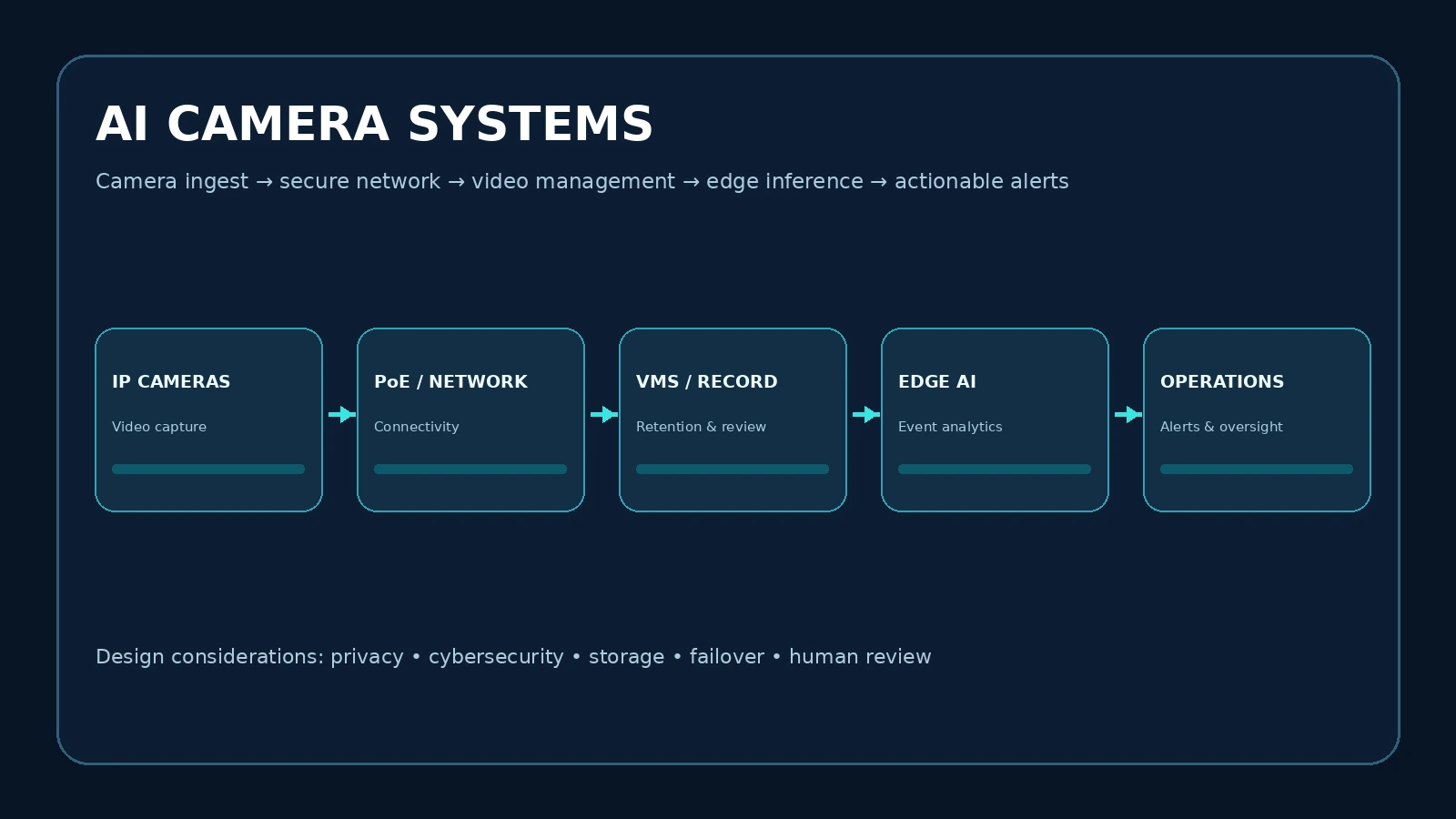
Cameras feed a network, the network feeds recording and review, analytics sit where the compute exists, and operations get the alerts. Every stage has a capacity limit and a failure mode, and the design has to survive both.
Design considerations we hold to: privacy, cybersecurity, storage, failover and human review. Where a system touches public space or staff, those are decided with the client, in writing, before installation.
What we will not claim
We are an engineering consultancy, not a licensed security contractor, and we do not claim a certification we cannot produce. Where installation requires a licensed contractor, that contractor is part of the project.
We do not sell guaranteed recognition accuracy, biometric identification or compliance certification. Analytics that identify people are a legal and ethical decision as much as a technical one, and local rules differ. Human oversight and data minimisation are part of every design we propose.
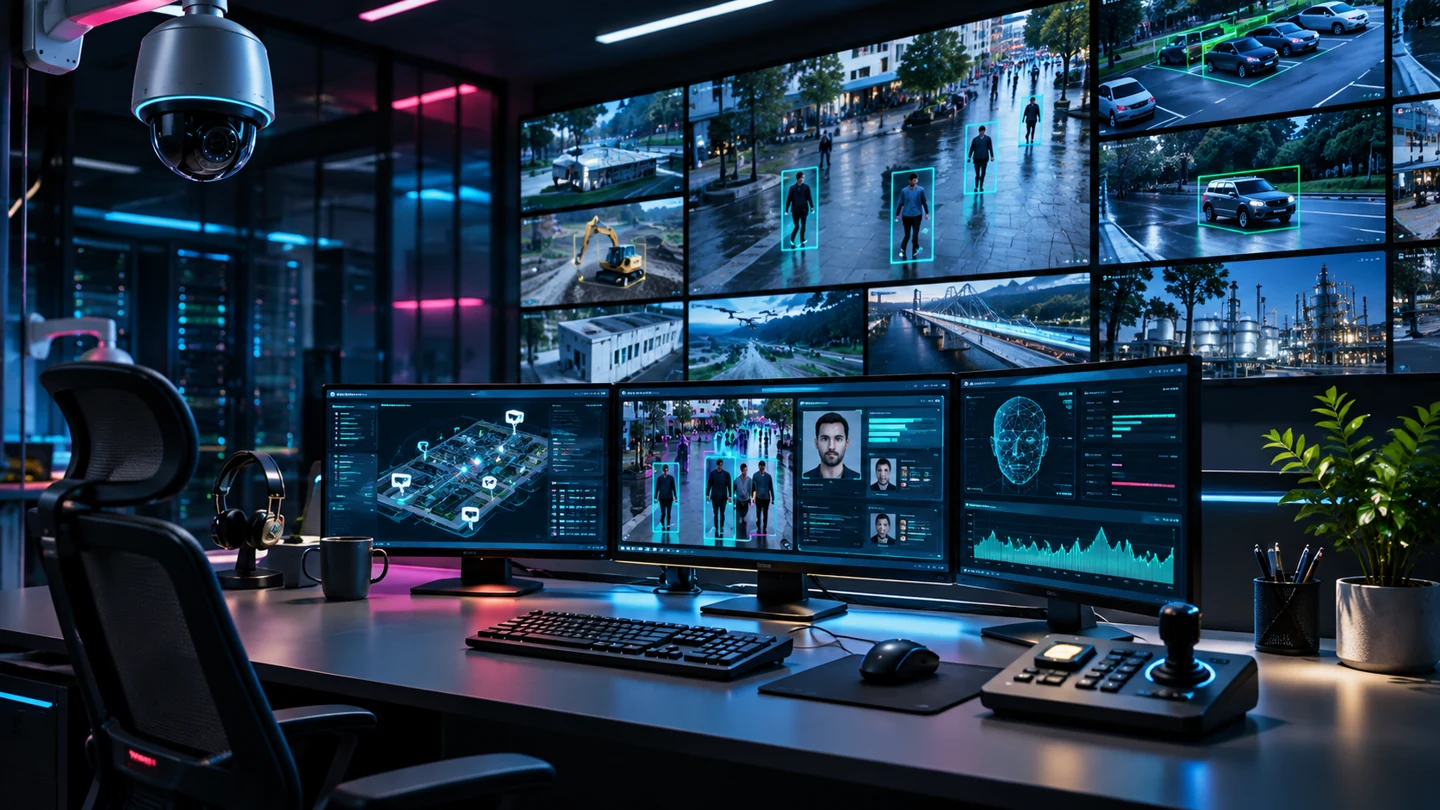
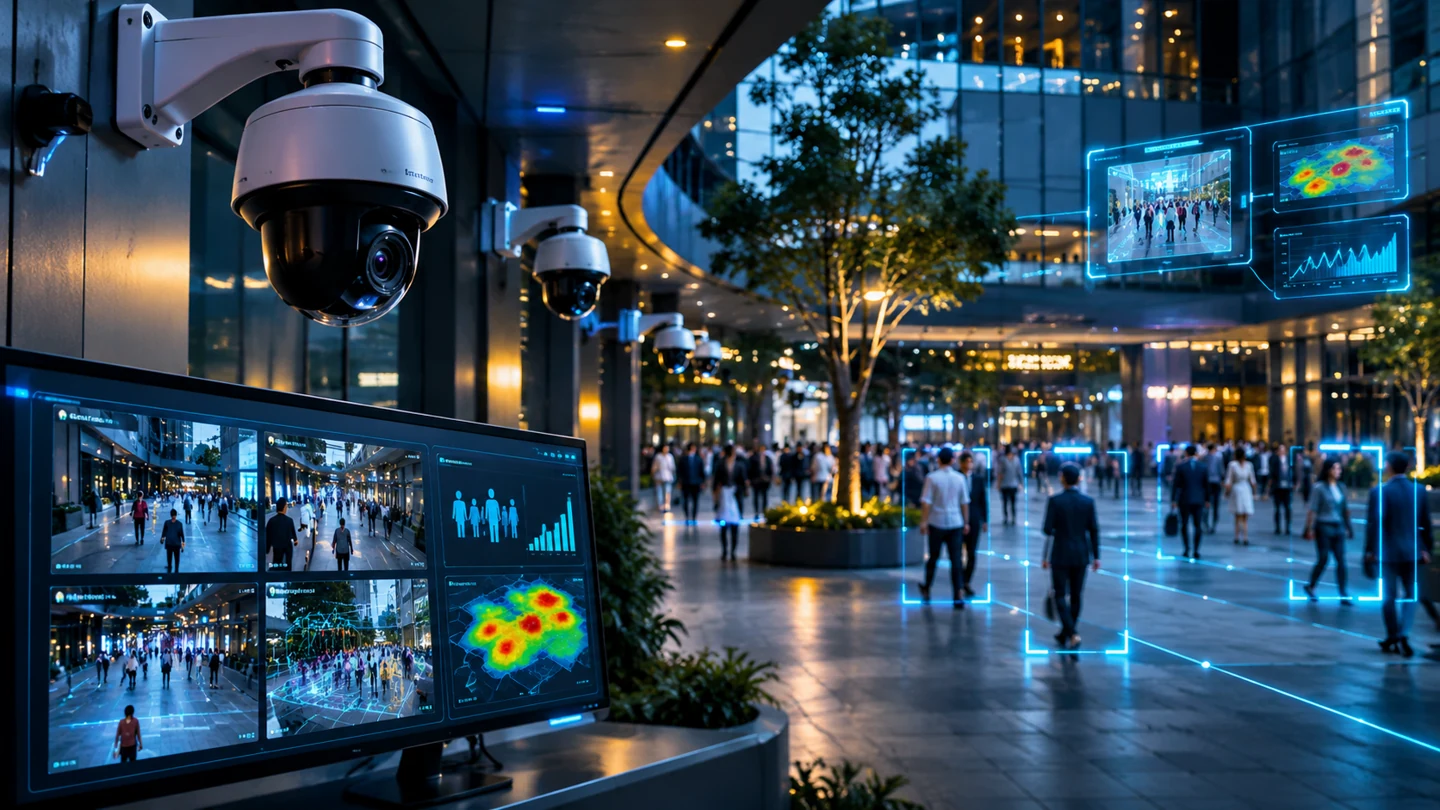
Imagery on this site, including interface mock-ups, is conceptual. It does not depict a working system or a client installation.
Bandwidth, storage and retention, without the guesswork
A four megapixel camera at fifteen frames per second and moderate compression typically produces two to four megabits per second. Sixteen of those at three megabits is a sustained forty-eight megabit stream, which decides the switch uplinks and the recorder, not the camera brand. Storage follows the same arithmetic: forty-eight megabits is roughly twenty-one gigabytes an hour, around half a terabyte a day, and about fifteen terabytes for a thirty-day retention window before RAID overhead and a margin for motion-heavy scenes.
Most retention disputes trace back to this sum being done after the purchase instead of before it. We model it up front, including the scenes that encode badly, the cameras likely to move to higher resolution later, and what happens when a recorder fails at two in the morning. Evidence export is designed at the same time, because a clip that cannot be produced quickly with a defensible audit trail is not much use to the people who need it.
Placement, lenses and the limits of resolution
A camera is a lens, a sensor and a scene. Resolution alone does not identify a person at forty metres; pixels on the subject do. We work backwards from what the system has to answer, whether that is detect, observe, recognise or identify, then choose lens and position, and check the result against lighting, glare, weather and the angles the site will actually present during the year.
Where an existing cable run cannot be replaced, it is tested before it becomes a constraint on the whole design. Coax that carried analogue video often survives a migration; cable that was never installed to standard usually does not, and finding that out during installation is the expensive version of the conversation.
Related expertise
Plan a camera system that still works in five years.
Send the site, the camera count and what the system has to answer.